How to Organise a School Music Performance: The Whole-School Concert
By Corinne Hope6 min read
Updated

A whole-school concert is a big logistics job with some music in it. The singing is the part your classes already know how to do. What makes or breaks a school music performance at Christmas or in the summer is everything around it: the running order, the rehearsals in the hall, whether anyone at the back can hear, and what parents are allowed to film.
This post is about the big event. If you're getting one class ready for an assembly, start with our post on organising simple music performances instead.
How to organise a school music performance: date, length and running order
Book the hall and check the school calendar first. Talk to the office about clashes and the PTA's plans, and find out how many people the hall can safely hold: that tells you whether you'll need two performances to fit every family in.
Then decide how long it will be. Under an hour is kind to everyone, especially the youngest performers and the toddlers in the audience. A common shape is one item per class, two to four minutes each, with a whole-school song to open and another to close. KS1 items work best with actions and a song they know well; KS2 can take on parts, a round or a class instrument piece.
When you write the running order:
- Put Reception and Year 1 early. They tire fastest, and their families relax once they've seen them.
- Follow any item that needs setting up (instruments, chairs) with one that doesn't, so you can set up during it.
- Mix big and small, loud and quiet. Two ukulele classes in a row will feel long.
- Start strong and finish strong. The opening and closing songs are what parents remember.
- Put a timing next to every item, including the changeovers. Getting a class on and off takes a minute or two, and across a whole school that adds up fast.
Give a copy to every member of staff, the person running sound and whoever introduces the items.
A rehearsal schedule that works backwards
Start six to eight weeks before the date, and share the schedule with staff early, so nobody finds out about a hall rehearsal that morning.
- Six to eight weeks out: agree the running order, make sure every class teacher knows their item, and start the whole-school songs in singing assembly. For a Christmas concert, our Christmas carols lyrics sheets save typing out the words.
- The weeks after: classes rehearse their own items in class, ten minutes a day.
- Two weeks out: give each class one slot in the hall to try where they'll stand and how they sound in the space.
- The final week: a "top and tail" rehearsal, where each class walks on, sings just the first and last lines, and walks off, in running order. It's the fastest way to find the problems in the changeovers. Then a full dress rehearsal, with the rest of the school as the audience if you can.
Sound: being heard at the back
A hall full of people in coats sounds quieter and duller than the empty hall you rehearsed in, and children's voices don't carry as far as you'd hope. The commonest problem is a backing track that drowns them. Set the volume from the back of the hall with the children singing, then turn it down a little more.
Most choirs don't need microphones if they face the audience and sing out. Use one or two microphones on stands for speaking parts and solos, test them in the hall, and keep the speakers in front of the microphones to avoid feedback. Put one confident adult, or a trained Year 6 tech crew, on sound with a printed cue list. Keep every track in one playlist, downloaded rather than streamed, with notifications turned off, and a copy on a second device.
Parents, tickets and photo permissions
If the hall won't fit everyone, limit tickets per family or run two performances, one in the afternoon and one in the evening. Keep seats near the front for anyone who needs them. Decide in advance where children wait (in classrooms, with an adult, not in the hall) and exactly how they're handed back to families at the end. That last part needs the clearest plan of the night.
Photos need a decision before the night, not during it. The Information Commissioner's Office says data protection law doesn't stop parents taking photos or videos of their own children at school events for personal use. Schools can still set their own rules, for example for safeguarding, and some families will have opted out of photos or have good reasons why their child mustn't appear online, so check with the office who they are. Some schools ask parents to photograph only their own child and not to post other children online; others have a photo moment at the end. Whatever you decide, put it in the letter home and say it at the start: "You're welcome to take photos of your own child during the last song. Please don't share pictures of other children online."
If the school films the concert itself, that's different: it's the school's own use, so data protection law applies. Check your school's photo permissions first, leave out any child whose family has opted out, and use a school device, not your own phone. The same goes for a parent or PTA volunteer filming it for the school. Our post on involving parents and the community has more on sharing recordings safely.
Copyright is simpler than people fear for state schools in England. The DfE buys copyright licences for all state-funded schools, covering performing music at school events, playing recorded music, and recording pupils' performances, including CDs or DVDs made to give away or sell for fundraising. Independent schools aren't covered and arrange their own. But the licence for performing music doesn't cover a show that tells a story, such as a musical: the Centre for Education and Finance Management, which runs that licence for schools, says you need permission from whoever owns the rights. A nativity can fall either side of that line, so if you've bought a published one, check what performance licence came with the script.
On the night
Give every adult one job: introducing the items, running sound, front of house, first aid, or looking after a class. Keep children busy while they wait, because a quiet film or colouring in the classroom beats sitting still for forty minutes. Have water ready for the singers, and start on time. If a track won't play, have a teacher lead the song unaccompanied while someone sorts it out.
Afterwards
Thank the staff and the children, and give performers something to take home: our certificates for performing in a concert are ready to print. Then, while it's fresh, write down what overran and what you'd change, and put the note in the folder for next year. Your first job this week is smaller: write the running order, with timings, and send it to staff.
Resources to try
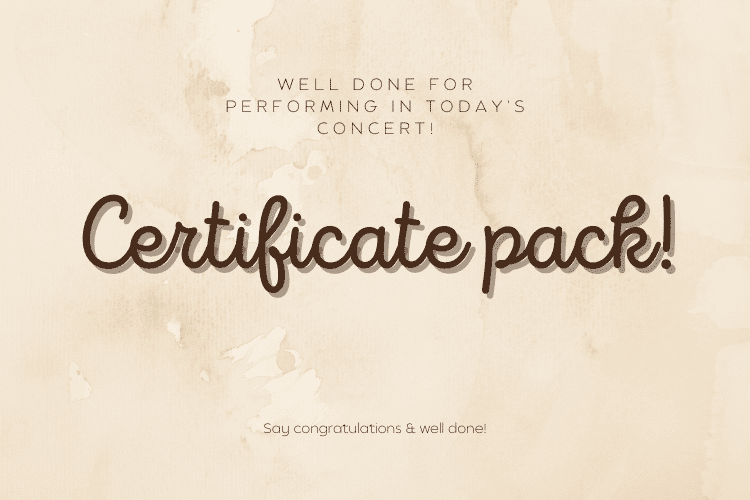
Fun Music Certificates For Performing In A Concert!
Worksheets · Ages 0 to 11
A pack of 6 music certificates you can use to say well done and thanks to your children for performing in a concert. Ready to print out and write on!

Motivational Music Posters
Displays · Ages 0 to 11
Motivational music posters are great for getting motivated to exercise, study, or complete other tasks. These posters feature songs that inspire people to take action.
Large Music Note Display Cutouts
Displays · Ages 0 to 11
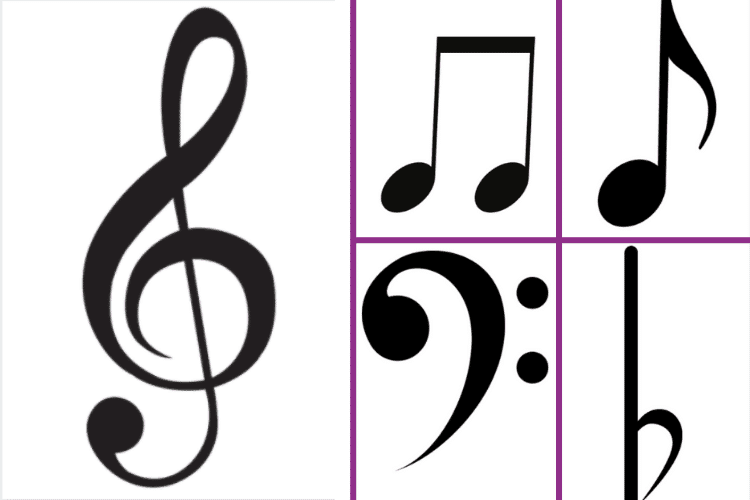
Decorate your classroom this term with our music note display cut-outs, ready to go! Just print and stick.
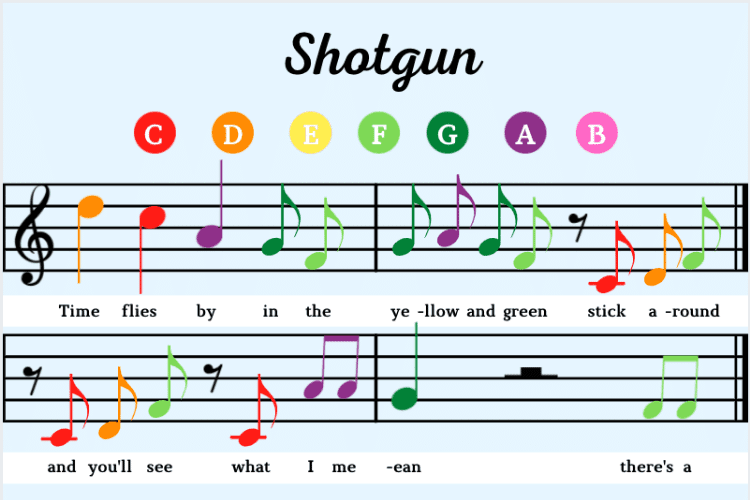
Easy Boomwhacker Sheet Music: Shotgun (KS1/2)
Worksheets · Ages 0 to 11
Test your classes ability to play and read music at the same time with this boomwhacker sheet music!