Music Education at Home: How Parents Can Help Without Being Musical
By Corinne Hope4 min read
Updated
This page is for parents and carers. (Teachers: it's written so you can send the link straight home.) You don't need to read music or sing well to support music education at home. What helps most is ordinary: singing and listening together, and taking an interest when your child brings music home from school. Here's how, with a ten-minute game to start with.
Music education at home starts with singing
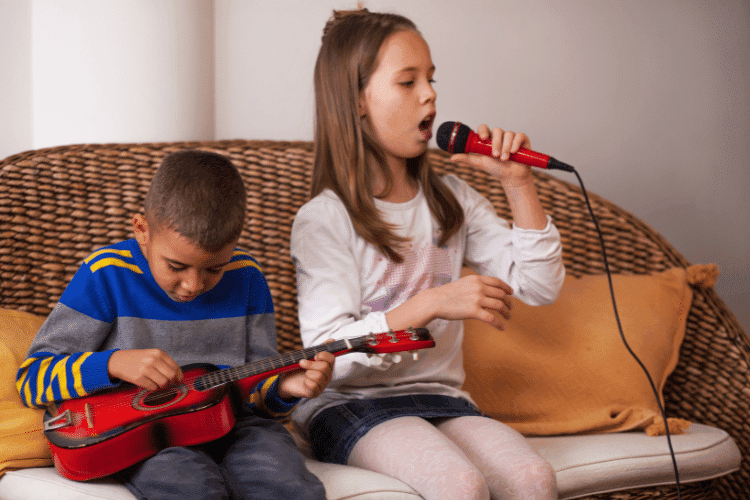
Sing in the car or while you cook. It doesn't matter if you think your voice is bad; your child is very unlikely to mind. Nursery rhymes, film songs, the songs you grew up with and whatever they've learned at school all count.
Ask your child to teach you a song from school. Children love being the expert, and teaching it to you is good practice. Try not to say "I can't sing" in front of them, because they'll copy that too.
Listening together
Put music on at breakfast or in the car, and take turns choosing. Every so often, ask one question about it:
- "What instruments can you hear?"
- "Is it fast or slow? Loud or quiet?"
- "What does it make you think of?"
- "Why do you think you like it?"
One question is enough. You're not testing them, just getting them to listen rather than only hear. Once a week, try something neither of you would normally choose, such as a film soundtrack or music from another country. If your child likes drawing, our free My Musical Mind sheet lets them draw a face and fill its head with the thoughts and feelings a song gives them.
Look out for free concerts too, from brass bands in the park to your local music hub's concerts, where children can see instruments being played up close.
A ten-minute game: copy my clap
This is the same kind of game children play in music lessons, and it needs nothing but hands.
- Clap a short pattern, about as long as saying "fish and chips, fish and chips". Say: "Copy me." Your child claps it back. Do a few (2 minutes).
- Swap over. Your child claps a pattern and you copy. Get it wrong on purpose now and then, and let them correct you (3 minutes).
- Add other sounds: pat your knees, stamp, click, or tap a wooden spoon on a saucepan (2 minutes).
- Put a song on and clap along to the beat together, then try clapping only on every other beat (3 minutes).
For younger children (Reception and KS1), keep the patterns very short and add actions to songs they know, such as "Heads, Shoulders, Knees and Toes" sung faster and slower. For older children (KS2, Years 3 to 6), make the patterns longer and take turns inventing them, or try layering: one of you keeps a steady beat while the other claps a pattern over the top. Our free Clap a Rhythm sheet has ready-made patterns if you want more.
Helping with practice
If your child is learning an instrument, practice at home is where you can make the biggest difference, and it's often where things go wrong.
- Little and often beats one long session a week. For a beginner, ten minutes most days is plenty.
- Pick a regular time, such as straight after tea, so practice becomes routine rather than a daily argument.
- Ask them to play you what they learned this week, and to show you the hard bit. Being listened to keeps children going.
- Praise the effort and the improvement ("that bit was smoother than yesterday") rather than talent.
- Give them somewhere to play without brothers and sisters commenting. A beginner on the recorder or violin can sound rough at first. That's normal, and it gets better.
- If they want to give up, it's often when the instrument stops being new and starts being hard. Talk to their teacher before you decide anything: a new piece, a different practice time or a short break can help.
In England, primary schools are expected to offer whole class or group instrumental lessons in school time, usually in Years 3 to 6, and you shouldn't be charged for those. The gov.uk page on what the National Plan for Music Education means for children explains what your child should get at school and where to find help with the cost of lessons. Our post on reasons to learn to play an instrument covers how children can start.
Free tools worth trying
Chrome Music Lab is a free set of music experiments that runs in a web browser on a phone, tablet or laptop, with no account needed. Its Song Maker lets children build a tune on a grid and play it back, which is a good way in to making up music of their own. BBC Ten Pieces has short films introducing pieces of classical music, made for children aged 7 to 14.
And if your child brings a song home from school, ask their teacher whether there's a recording or a words sheet you can use at home.
This week, try one thing: put a song on at breakfast and ask your child what they can hear. That's music education at home, and it takes two minutes.
Resources to try
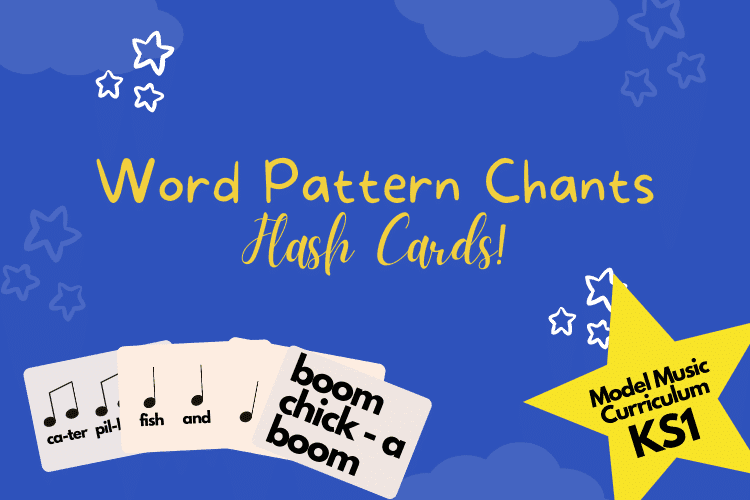
Musical Chants Flashcards: Fun Music Curriculum Resources KS1
Worksheets · Ages 0 to 7
Based on the KS1 Model Music Curriculum, these flashcards help your children practice the word pattern chants. Ready made for you to cut out and use exactly as you would like to in your classroom.
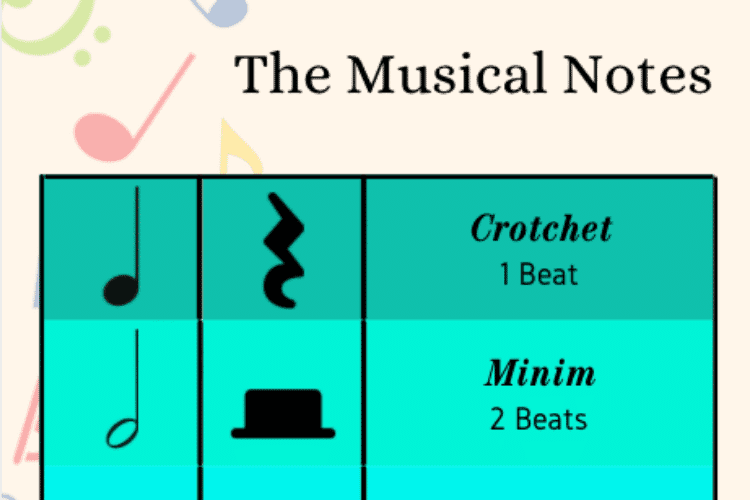
The Musical Notes (Music Display Poster)
Displays · Ages 5 to 11
A ready-made poster explaining each musical note, including their symbols, rests and names! Perfect for a music display!
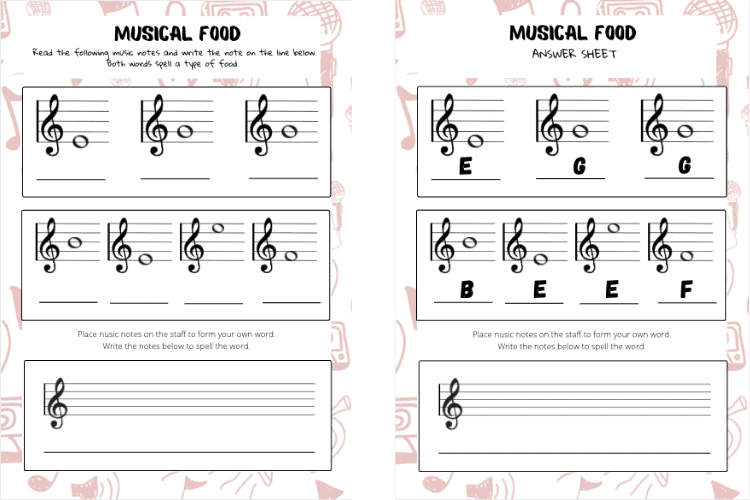
Music Notation: Musical Food
Worksheets · Ages 7 to 11
Make music notation fun! With this simple task sheet you can have your students working out the foods spelt using the notation on the stave!
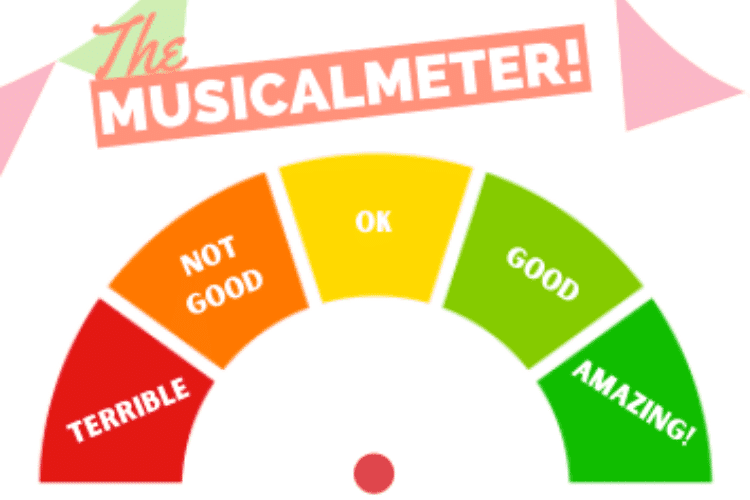
Music Reflection: The Musical Meter
Worksheets · Ages 0 to 11
By simply adding a line to their feelings, what did your class think of the music you play them? Try this music reflection activity today with your class!