
Teaching Ukulele in Primary Schools: Why It Works and How to Start
By Corinne Hope5 min read
Updated

Teaching ukulele in primary schools works because the instrument meets children halfway. It's small enough for a seven-year-old to hold, and one finger on one string gives you a chord to sing over. This post is for the teacher who's just been handed a class set: tuning, what to teach first, a first lesson you can run as it is, and keeping 30 ukuleles in working order.
Why teaching ukulele in primary schools works
Children make a decent sound in their first lesson, and that matters more than anything for keeping them going. You can sing and play at the same time, so the ukulele fits straight into songs you already teach. It's quieter than a class of recorders, and because it doesn't need breath, a child with a cold can still play.
The honest downsides: ukuleles go out of tune, especially when the strings are new, and fingertips get sore for the first few weeks. Neither is a reason not to do it, but both need planning.
Tuning: G C E A
Hold the ukulele as if you're playing it. The string nearest your face is G, then C, then E, and the one nearest the floor is A. A class mnemonic helps, such as "Goats Can Eat Anything". The G string sounds higher than the C next to it, which surprises anyone who plays guitar. That's normal on a ukulele.
Use clip-on tuners rather than tuning by ear. They clip to the head of the ukulele and show the note on a small screen. Once you're practised, a class set takes roughly 15 to 20 minutes, so do it before the lesson, not during it. Upper KS2 children can learn to tune their own, which is a useful skill in itself.
New strings stretch, so a brand-new set will drift out of tune for the first week or two. Tune them before every lesson for that first fortnight and they'll settle.
The first chords and songs
Start with one-finger chords. On a chord box, the vertical lines are the strings, with G on the left, the horizontal lines are the frets, and the dots show where fingers go.
- C: ring finger on the third fret of the A string, the string nearest the floor.
- A minor: middle finger on the second fret of the G string, the one nearest your face.
- F: keep the A minor finger down and add your first finger to the first fret of the E string.
- G7: three fingers, so leave it until the others are comfortable.
With C alone you can play a round: "Frère Jacques", "London's Burning" and "Row, Row, Row Your Boat" all sit over one chord. Once G7 is comfortable, the traditional two-chord songs open up, such as "He's Got the Whole World in His Hands", "Skip to My Lou" and "Clementine". When a class can swap between three chords in time, try our free Three Little Birds ukulele chords sheet, then the Stand By Me chords chart for members, which adds a fourth chord.
Strumming without the noise
Strum down with the side of the thumb or the nail of the first finger, over the place where the neck joins the body, not over the sound hole. Start with four slow down-strums to a count of four, and get the whole class strumming together before anyone changes chord. When a change is coming, strum only on the first beat of the bar, so children have three beats to move their fingers.
Teach a rest position on day one: ukulele flat on the lap, strings to the ceiling, hand flat on the strings. When you hold yours up, everyone goes to rest. Our post on classroom management in music lessons has more on stop signals and handing out instruments.
A first lesson with a class set (45 minutes)
- Before the lesson, tune every ukulele and set them out in numbered order.
- Hand out by table, each child taking the ukulele with their number (5 minutes).
- Show how to hold it: body against the chest, strumming forearm resting over the front, thumb behind the neck. Practise going to rest position three times (5 minutes).
- Pluck each open string in turn while the class says its name: G, C, E, A. Then strum all four together, four slow strums at a time (5 minutes).
- Teach C. Say: "Ring finger, third fret, the string nearest the floor. Press just behind the metal line, not on top of it." Walk round and check every hand (10 minutes).
- Sing "Frère Jacques" while the class strums C on the first beat of each bar, then on every beat. Split the class to sing it as a round while everyone keeps strumming (15 minutes).
- Back to rest position, then collect by table, counting them in (5 minutes).
For KS1, Year 2 children can manage a soprano ukulele, but keep to open strings and C, strumming along to songs you sing. Chords start properly in KS2: Years 3 and 4 can work on C, A minor and F, and Years 5 and 6 can add G7, simple strumming patterns and reading chord boxes on their own.
Looking after 30 ukuleles
Number every ukulele and every bag, and give each child a number. They get the same ukulele every week, and you'll know who had the one that came back with a snapped string.
- Store them in their bags on a trolley, in a cupboard or on wall hooks, away from radiators and sunny windows. Heat and damp can damage them.
- Keep spare strings and two or three clip-on tuners in the same place. Replacing a string takes 10 to 15 minutes, and the new one will need retuning for days.
- Count them back in before the class leaves. A missing ukulele is usually under a table.
- Carry them one at a time, held by the body, never in a pile by the necks.
Sore fingertips are normal for the first few weeks. Keep the chord work in short bursts, and let children rest their fretting hand while they strum open strings.
If you don't have a class set yet, ask your local music hub whether it hires ukuleles to schools or teaches them as whole class lessons. Then start with C and a round, and add one chord at a time. For the other classic class instrument, see our reasons for teaching the recorder.
Resources to try
 Free
Three Little Birds Ukulele Chords Sheets
Worksheets · Ages 5 to 11
An easy to use Three Little Birds Ukulele Chords Sheet by Bob Marley.
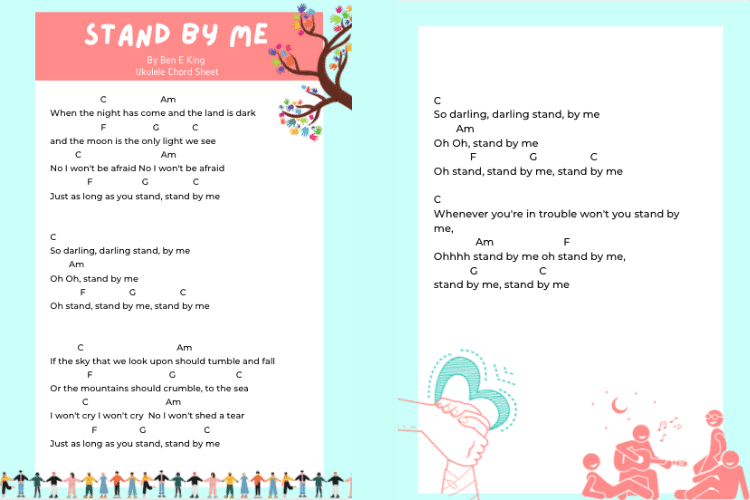
Stand By Me Ukulele Chords: Easy Chord Sheets!
Ages 5 to 11
An easy to use Stand By Me Ukulele chords Sheet by Ben E. King.
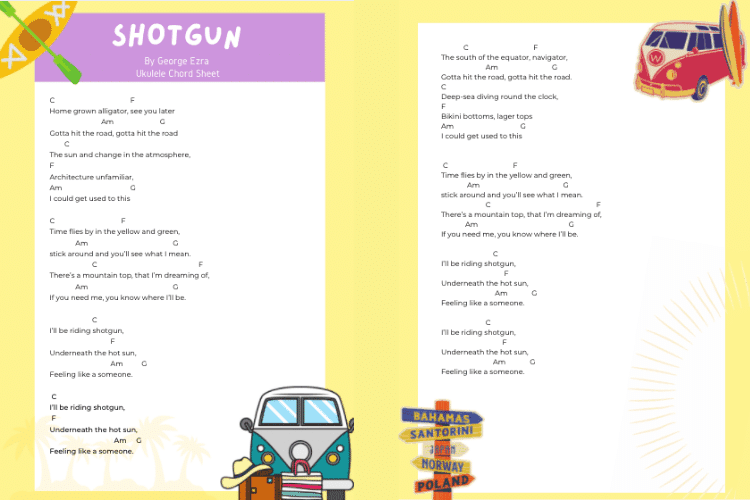
Shotgun Ukulele Chords Sheets
Worksheets · Ages 5 to 11
Easy to use Shotgun Ukulele Chords Sheets by George Ezra.
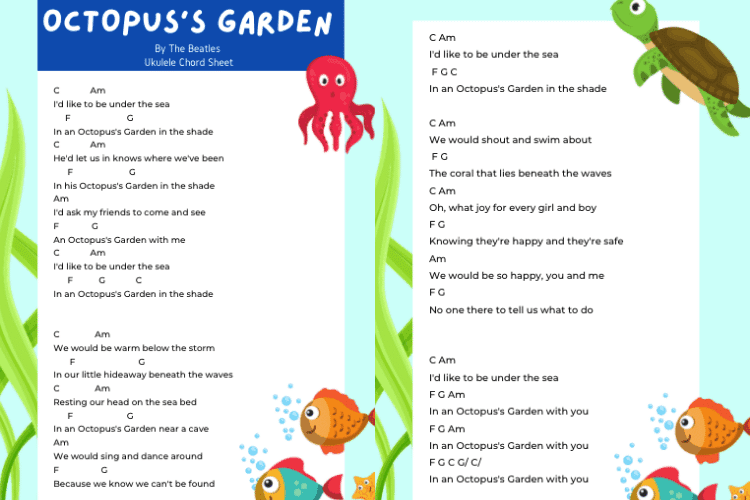
Octopus’s Garden Ukulele Chords Sheet
Worksheets · Ages 7 to 11
An easy to use Octopus's Garden Ukulele Chords Sheet by The Beatles.