The Benefits of Learning Music: Our Top 4, With Words You Can Use
By Corinne Hope5 min read
Updated
Sooner or later someone asks you to explain why music matters, usually for the newsletter or a governors' meeting. This post sets out the benefits of learning music in words you can use: four benefits we'd stand behind, a paragraph ready to copy into a newsletter, another for a governors' report, and a short lesson that gets the children's own words to go with them.
Four benefits of learning music we'd stand behind
We've kept to benefits you can see in your own classroom, so you can back each one up with something your children have done.
They get good at something real
Children who are taught music well can sing in tune, keep a steady beat, play an instrument and make up music of their own. Those are skills, as real as swimming or reading a map. The National Curriculum in England says a good music education should help pupils develop "a love of music and their talent as musicians, and so increase their self-confidence, creativity and sense of achievement". That's the case in the government's own words.
They learn to listen properly
Music asks children to listen hard, whether that's picking out one instrument or noticing their group drifting out of time. You can hear this improve over a year. Keep the claim to listening in music, though. Whether it makes children better listeners everywhere is much less clear.
They learn to work as a group
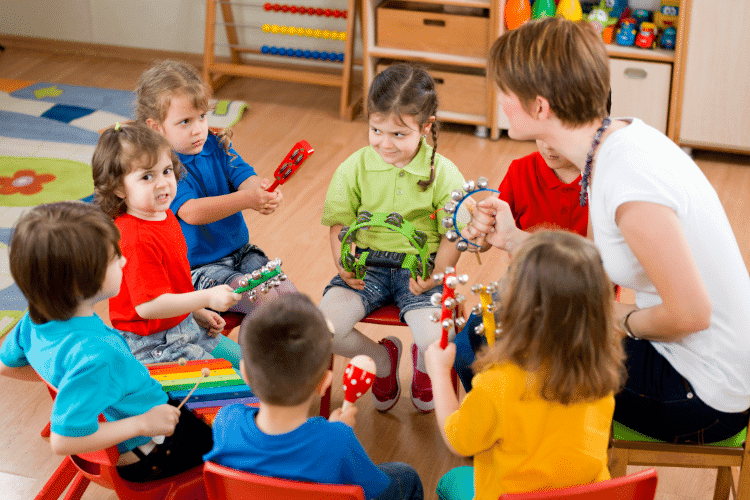
A class performing one song has to start and finish together, and every child's part matters, including the quiet one on the triangle. Group music is one of the few times a whole class makes one thing at once, and children can tell when it works.
They get to stand up and be heard
Music gives children regular, low-risk chances to perform, from singing a line alone to sharing a piece in assembly. Over a year, many become more comfortable being listened to. It's hard to measure, so describe what you've seen rather than promising it.
What we've left out, and why
You'll see claims that music raises maths scores or that listening to Mozart makes children cleverer. We've left those out. The research on music lessons improving other subjects is mixed, and the Mozart effect doesn't hold up. If a governor asks, "music is worth teaching for its own sake" is a stronger answer than a claim you can't support. Our post on what the evidence says has the detail.
A paragraph for your newsletter
Copy this, change the words in square brackets, and send it. It's short on purpose.
This term, [Year 4] have been learning [to play the ukulele]. They can now [play three chords and sing along at the same time], and you can hear them at [our class sharing on (day) at (time)]. Music lessons help children get properly good at something: singing in tune, keeping a steady beat, listening carefully and making music with other people. As one pupil put it, "[a child's own words, used with permission]". If you'd like to help at home, ask your child to teach you what they've learned.
A paragraph for a governors' report
Every class from Year 1 to Year 6 has [one hour] of music each week. In England, the National Plan for Music Education (2022, non-statutory) describes good provision as including at least an hour of curriculum music a week, a school choir or vocal group, a school ensemble, a performance each term and the chance to hear live music at least once a year. This year we have [a weekly choir, whole class ukulele lessons in Year 4 through our music hub, and a sharing each term]. Our next steps are [starting a school band and taking the choir to sing in the community]. Children's progress is shown in [short recordings from the start and end of each unit], which we're happy to share at the next meeting.
Keep it honest: if you don't have a choir yet, say so and say what's planned. A short, honest plan is easier for governors to support than a list of claims. For the wider job of making the case to senior leaders, see our post on promoting music education in your school.
Get the children's words first (20 minutes)
Alongside your recordings, the best evidence you have is what the children say they can now do. This activity collects it at the end of a unit.
- Play back a recording of the class performing, or perform the piece once more (3 minutes).
- Ask: "What can you do now that you couldn't do at the start of term?" Take a few answers and write the specific ones on the board (5 minutes).
- Children fill in three sentence starters: "In music this term I learned...", "The hardest part was..." and "Next I want to..." Our free My Musical Mind reflection sheet works well alongside them (10 minutes).
- Choose two or three answers to quote, with the child's permission and within your school's consent rules. Use "a Year 4 pupil", not names (2 minutes).
For KS1, do steps 1 and 2 together as a class, then let children draw themselves making music and tell you one sentence, which you write down for them. For KS2, use the written starters and push for detail: "I learned to play C and G7 on the ukulele" beats "it was fun".
That last one is what usually goes wrong. Ask a class what they learned and plenty will say "it was fun". Accept it, then ask "What did you do that was fun?" and write down the second answer, not the first.
Run the reflection at the end of this unit, pick the best line, and put it in the brackets in the newsletter paragraph above. For something to go home with it, our free Rockstar of the Week certificate does the job, and when it's report time, members can use our example music report comments.
Resources to try
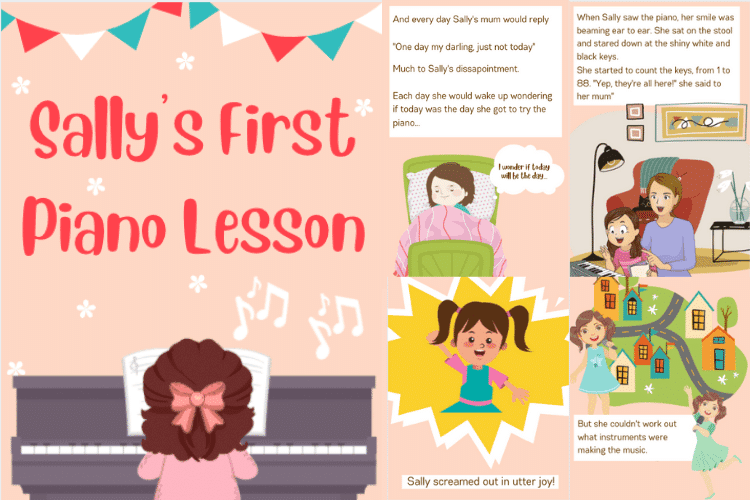
Fun KS1 Music Lesson: Sally’s First Piano Lesson
Worksheets · Ages 0 to 6
Sally is desperate to start learning the piano, but will she get too? Use this KS1 music lesson to encourage your students to try new instruments, learn facts about the piano and how playing music can boost confidence!
KS2 Rhyming Words
Worksheets · Ages 7 to 11
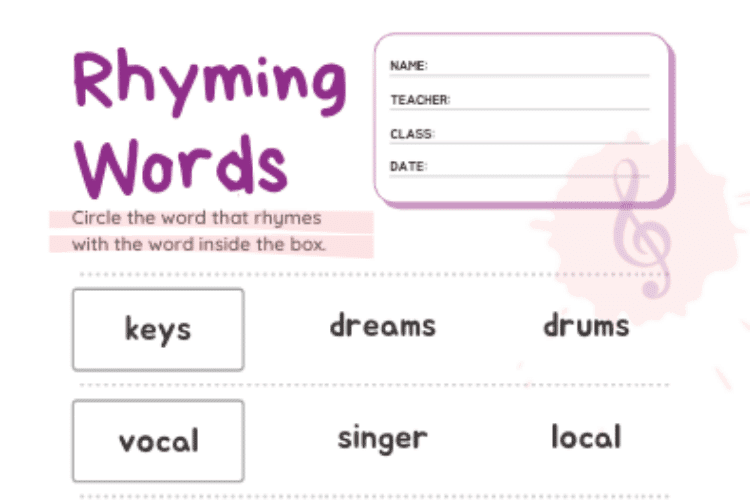
KS2 Rhyming Words! A more advanced version of our popular KS1 rhyming words activity. Complete with trickier rhymes, longer words and possibly some new words to learn. Can your class connect the word with its rhyming partner?
KS1 Rhyming Words
Worksheets · Ages 5 to 7
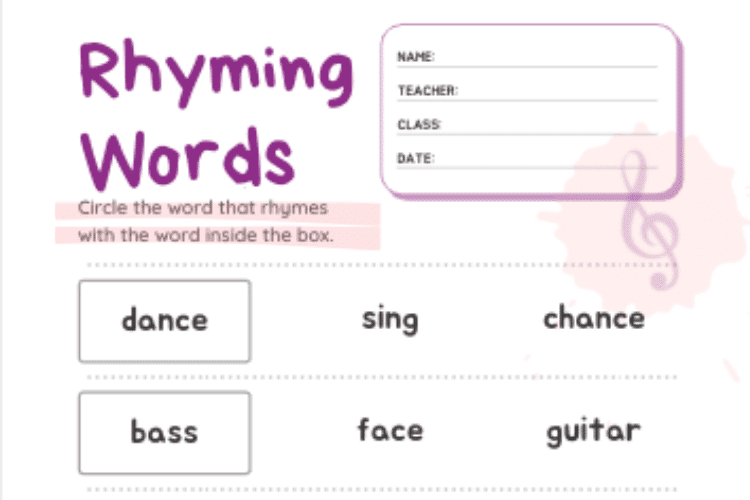
KS1 Rhyming Words Activity! Can your class match the word to its corresponding rhyming counterpart? One of the first steps to learning about songwriting is learning how to find rhyming words to go along with your lyrics. Start your class off on their songwriting journey with this easy to implement rhyming activity.
Model Music Curriculum Keyword Posters
Displays · Ages 5 to 11
With keywords taken directly from the Model Music Curriculum, you can use these posters to be a quick reminder for you or your pupils.