
Top 5 Reasons Children Should Learn to Play an Instrument (and How to Start)
By Corinne Hope5 min read
Updated

We think every child should get the chance to learn to play an instrument, though not for the reasons usually given. Here are five honest reasons, a taster lesson that helps children choose, and how children in England can actually start, including what families can be charged and where to find help with the cost.
5 reasons to learn to play an instrument
1. They get to make music, not just listen to it
There's a moment when a child plays a tune they recognise, on their own instrument, and it sounds like the real thing. Little else in school feels quite like it, and for some children it's the first time they've been good at something they chose.
2. They find out how practice works
An instrument is often the first place a child sees, week by week, that something hard becomes easy if you do a little of it often. The bar that was impossible in September is fine by Christmas. That's worth learning young, and with an instrument they can hear it happening.
3. They get to play with other people
Once children can play a little, there's a school band, a hub ensemble or an orchestra to join. Playing your part while everyone else plays theirs is a different skill from playing alone, and for some children the group is the reason they keep going.
4. It gives them something that's theirs
Being "the one who plays the cornet" can matter a lot to a child who finds reading or maths hard. It's a different way to be good at school.
5. It keeps doors open
A child who's played through primary school has choices later: secondary school ensembles, music GCSE, playing for fun at 40. Children who start later can still catch up, but starting at primary makes it easier.
One reason we've left out is "it makes children cleverer". The research on that is mixed, and the best-designed studies find small effects or none. We've set out the evidence in 5 ways music education helps children.
A taster lesson to help children choose (45 minutes)
Children often pick an instrument because a friend did, or because it's the only one they've heard of. A taster lesson gives them more to go on. Run it just before your school or hub offers lessons, so the letter home arrives while they're keen.
- Play our free Zoom It In game, where children recognise instruments from pictures. Say: "Tell me what it is, and how it makes its sound." (10 minutes)
- Sort the instruments by how they make a sound: blown, bowed, plucked or hit. Older classes can sort them into the orchestra's four families too (10 minutes).
- Talk through what learning each one is really like. Is it heavy to carry to school? Is it loud at home? Can you play a tune on it, or is it mostly rhythm? (10 minutes)
- Everyone mimes playing three instruments as you call them out, to feel the difference between holding a violin and holding a trumpet (5 minutes).
- Each child writes or draws their top two, with one reason for each (10 minutes).
For KS1, keep to steps 1, 2 and 4, sorting by blown, plucked and hit, and let children try your classroom percussion to feel the difference. For KS2, add the practical questions in step 3, because those are what help a family decide. Our instrument families posters are useful on the wall during this lesson.
A lot of the class will want the drums or the electric guitar. That's fine: write it down, and make sure each child has a second choice in case the first isn't on offer.
How children in England can start
There are usually three routes, and they're not either/or.
- Whole class lessons. Under the National Plan for Music Education (2022), primary schools should offer group instrumental teaching in class time, most likely in KS2 and ideally for at least a year, and parents shouldn't be charged for it. Often your local music hub provides the teacher.
- Lessons in school. Small group or individual lessons during the school day, often from a hub teacher. Families can be charged for these, because parents ask for them on top of the curriculum.
- Lessons outside school, from a private teacher or through your hub's activities outside school hours.
Whole class lessons are the fairest start, because every child gets a go whatever their family can afford. The end of that year is the moment to talk to families about carrying on.
Help with the cost
Cost stops many children starting, so it's worth knowing what help there is.
- Children in care can't be charged for music tuition at school, under the DfE's charging guidance.
- The National Plan for Music Education suggests schools use Pupil Premium funding to subsidise lessons.
- Your local music hub may offer financial help, and some hubs lend instruments. Ask what yours offers.
- Take it Away offers interest-free loans for buying instruments through participating shops.
- For exceptionally talented children aged 8 and over, the government's Music and Dance Scheme gives means-tested help with fees at specialist music schools and Centres for Advanced Training, after an audition.
The gov.uk page on what the National Plan for Music Education means for children is written for families and worth sending home with the lessons letter.
Once a child has started, the next battle is practice. Our page on music education at home is written for parents, with the practice tips we'd give any family, so send it out with the first week's lessons.
Resources to try
Which Instrument Is Playing? A PowerPoint Challenge
PowerPoint · Ages 6 to 11
An exciting PowerPoint game that challenges kids to identify instruments by their sounds! With vibrant visuals and crystal-clear audio, each slide features a different instrument playing a snippet of its signature sound.
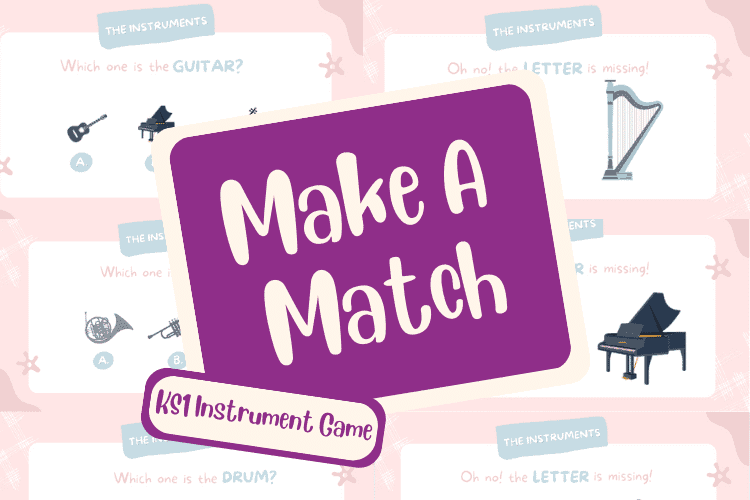
KS1 Instrument Game: Make A Match!
PowerPoint · Ages 0 to 11
Can your class recognise the different instruments in this interactive powerpoint? Use this KS1 instrument game with your class today!
 Free
The 12 Bar Blues: Learn the Blues Chord Structure
Worksheets · Ages 5 to 11
Use these fill in the blank sheets to help your children understand how the 12 bar blues works. It also gives an example in each key so your children can listen to exactly how the progression works in each key.
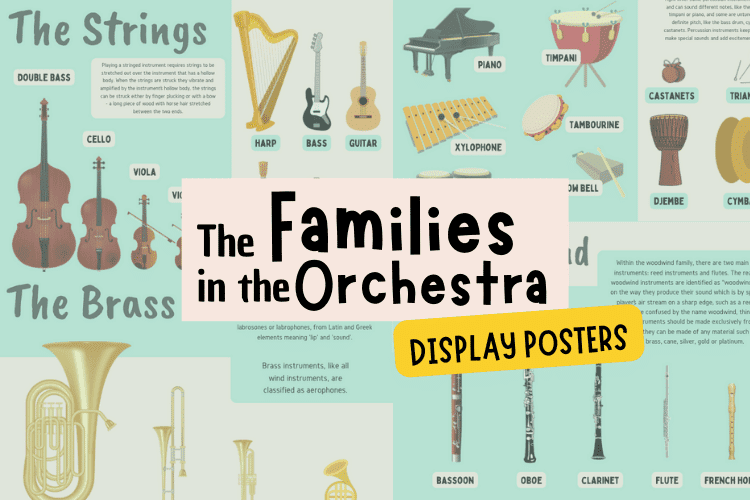
Instrument Families: 4 x Helpful Visual Aids
Displays · Ages 6 to 11
Decorate your music room with these helpful display posters showcasing the 4 instrument families.